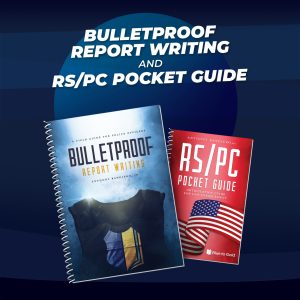


Description

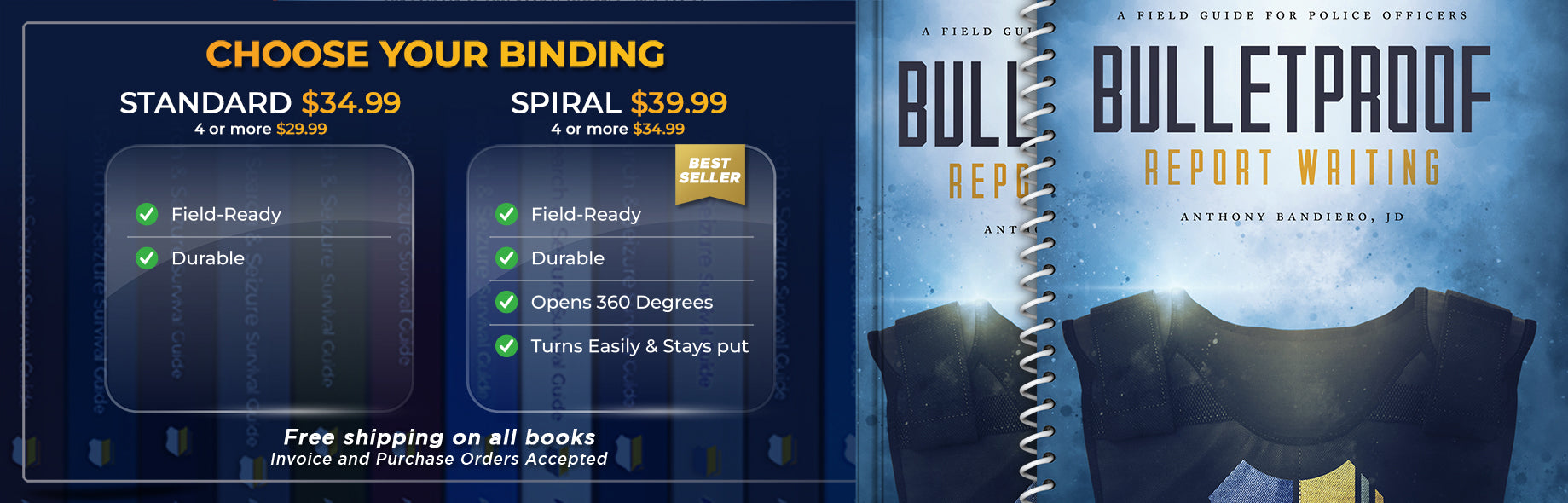


Your report is your testimony, frozen in time. Write it so it can’t be broken
the one thing you left out — the justification you never wrote down, the conclusion with no “because”
behind it, the element you forgot to establish. That’s where good police work quietly dies: not on the
street, but on the page.
attorney, veteran law enforcement trainer, and founder of Blue to Gold — it walks you through writing a
report that does its real job: prevent suppression motions, push cases toward guilty pleas, let the
prosecutor pick it up and run with it, and hold up when you’re on the stand a year later trying to
remember why you did what you did.
N.E.R.D.S. framework, and ten concrete techniques for writing clear, chronological, first-person reports
that read like a story instead of a stack of notes. Second, how to articulate the way you got your
evidence — turning every stop, detention, search, and entry into a Fourth Amendment justification a
judge will uphold. Third, what each crime actually requires — the elements you have to prove and put
on paper, from narcotics and property crimes to homicide, sex offenses, DUI, and crimes against
persons.
acting suspiciously” gets torn apart on cross. “The suspect was acting suspiciously because he was
pacing outside a closed store, repeatedly glancing over his shoulder” holds up. This book teaches you to
write that way every time — so your reasoning is on the record, your actions are defensible, and there’s
nothing left for the defense to exploit.
recruit writing your first narrative, it’s built to sit on your desk and ride in your patrol bag as both a
training tool and a working reference — with checklists you can run before you ever submit. Because the
arrest is only as strong as the report behind it. Make yours bulletproof
WHAT YOU’LL LEARN
Inside this book, you’ll learn how to:
• Write clear, chronological, first-person narratives that read like a story, not a pile of notes
• Use the 3 Golden Rules of report writing and the N.E.R.D.S. framework every time you write
• Harness the word “because” to turn observations into defensible, articulated conclusions
• Articulate the justification for every stop, detention, search, and home entry — before a suppression
hearing can
• Prove the elements of the crime on paper — narcotics, property, homicide, sex offenses, DUI, and
crimes against persons
• Document every liberty or property intrusion, even when it turns up nothing
• Write reports that prevent suppression motions, promote guilty pleas, and let prosecutors “pick up
the report and go”
• Run a completed-report and serious-crime checklist before you ever hit submit