

Description

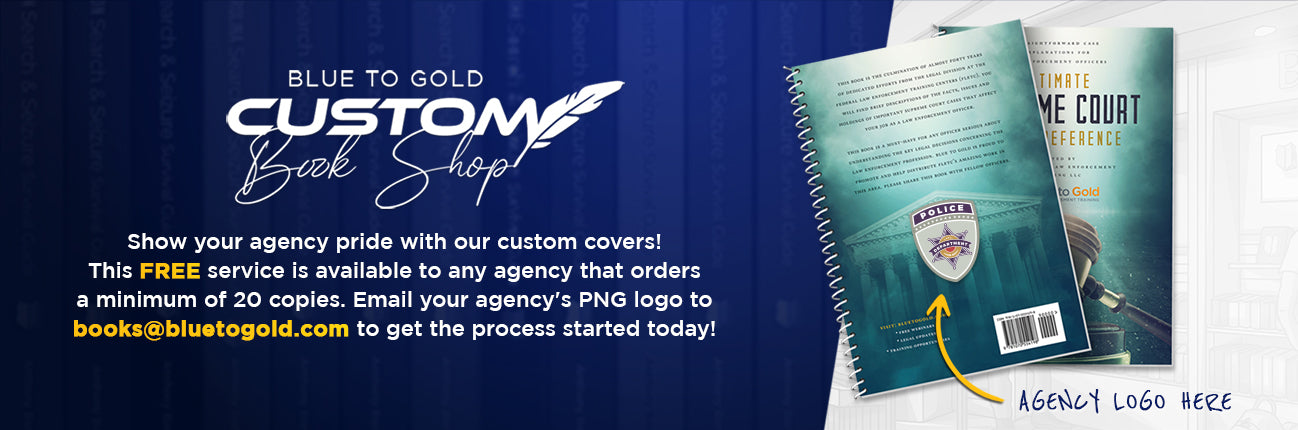

The Supreme Court cases that govern how you police — hundreds of them, explained in plain
English.
Nearly every rule you follow on the street traces back to a Supreme Court decision — Terry, Katz, Gates,
Carpenter, Rodriguez. But those opinions run dozens of pages of dense legal reasoning, and “I think the
Court said…” doesn’t hold up in a report, a briefing, or a courtroom. You need to know what the Court
actually held.
The Ultimate Supreme Court Legal Reference gives you exactly that. It’s a comprehensive collection of
the landmark Supreme Court cases that govern search, seizure, and policing — each one distilled into a
straightforward, plain-English explanation of what the Court decided and what it means for you. No
legalese, no wading through the full opinion. Just the holding, ready to use.
Hundreds of cases, organized the way the law actually works: what counts as a search and what counts
as a seizure; the levels of suspicion, from reasonable suspicion to probable cause; stops, arrests, and
traffic stops; search warrants — establishing probable cause, particularity, and knock-and-announce;
and the major exceptions and doctrines officers rely on every day. Whatever question comes up, you
can find the controlling case in seconds and read it in plain English.
Now in its 4th edition and kept current, it includes the modern decisions that changed the game —
Carpenter on cell-site data, Torres v. Madrid and Lange v. California on seizures and warrantless entry,
Collins, Rodriguez, Heien, and more — so you’re working from the law as it stands today, not a decade
ago. It’s the authority behind good police work: the actual precedent, in your hands.
From Blue to Gold — the nation’s leading search-and-seizure trainer. Whether you’re a patrol officer,
detective, field training officer, academy instructor, legal advisor, or prosecutor, this is the reference
you’ll keep within reach: to settle a question, prep a briefing, teach a class, or back up your decision with
the case that supports it. Because on the street and on the stand, it’s not what you think the Supreme
Court said — it’s what it held.
WHAT YOU’LL LEARN
Inside this reference, you’ll find:
• Hundreds of landmark U.S. Supreme Court cases, each explained in plain English
• What counts as a “search” and what counts as a “seizure” under the Fourth Amendment
• The levels of suspicion — reasonable suspicion and probable cause — and the cases that define
them
• Stops, arrests, and traffic stops, from Terry v. Ohio forward
• Search warrants: establishing probable cause, particularity, and knock-and-announce
• The major warrant exceptions and doctrines officers rely on every day
• Modern, tech-era decisions — Carpenter, Jones, Kyllo, Torres v. Madrid, Lange, and more
• Organized by legal topic, so you can find the controlling case in seconds
• The actual holdings you can cite in a report, a briefing, or a courtroom